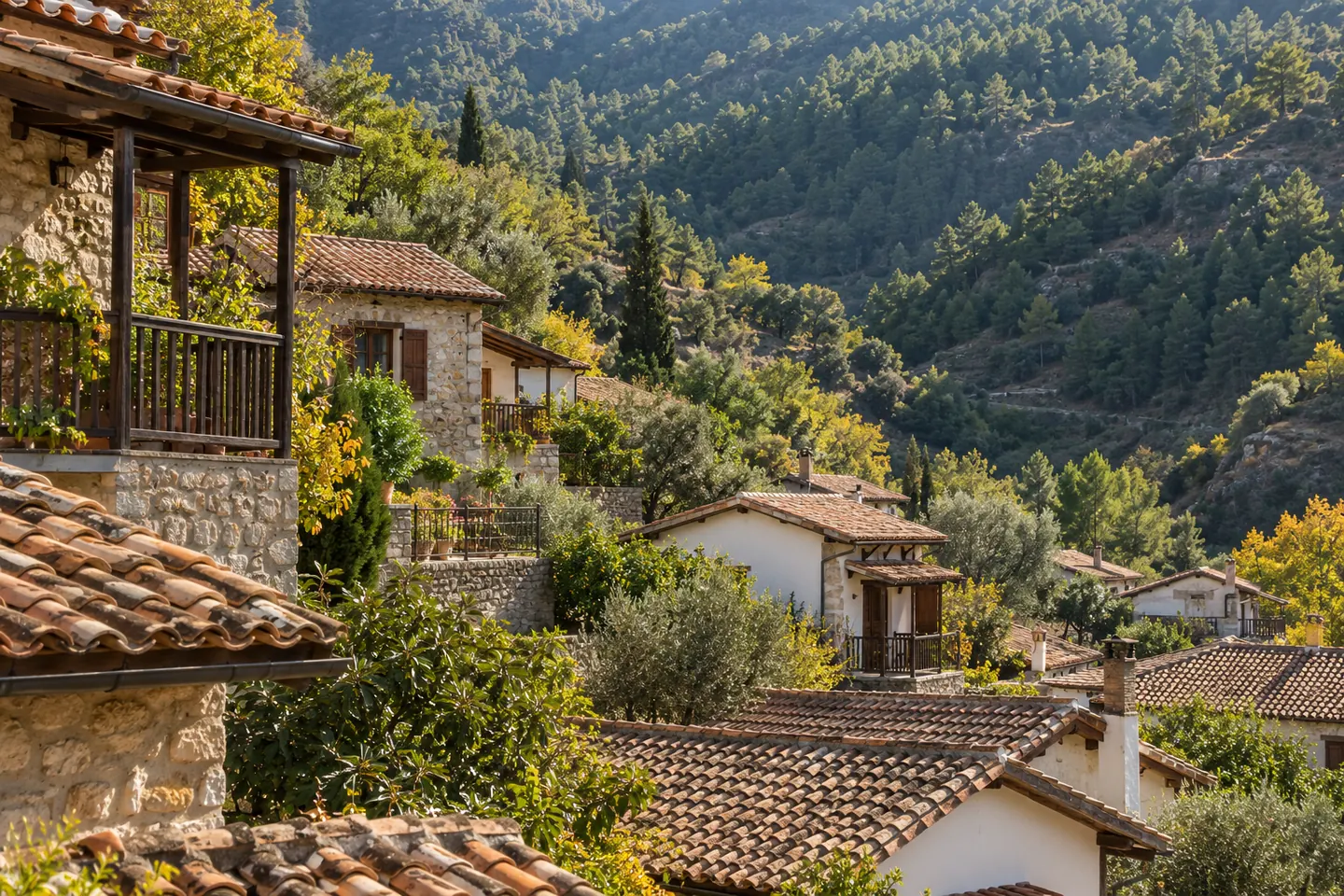
Kalopanagiotis is a mountain village in the Marathasa Valley, combining traditional architecture with an important monastery and a varied valley landscape. It is worthwhile for a quiet day of culture and scenery, especially if you do not want to visit as many Troodos villages as possible in succession. Agios Ioannis Lampadistis Monastery can be the focus, complemented by a short walk and a break. Allow deliberately for gradients and paths between village sections. The sulphur springs are part of local history, but do not promise freely accessible bathing facilities or any particular health benefit.
Treat the Marathasa Valley as an excursion area in its own right
Kalopanagiotis lies in a different valley setting from the southern mountain villages around Platres. The road follows the landscape, not a straight line between two sights. Calculate the actual route, not just kilometres. On a day trip from the coast, a clear focus is especially important so that enough time remains in the village.
The Marathasa Valley reveals itself through slow observation: different hillsides, clusters of houses and the connection to water shape the impression. First-time visitors should initially focus on a manageable part of the village. The overview of Troodos sights helps place Kalopanagiotis within a sensible route. The entire mountain region is not a single day-trip destination whose key places necessarily fit into one journey.
Visit Agios Ioannis Lampadistis attentively
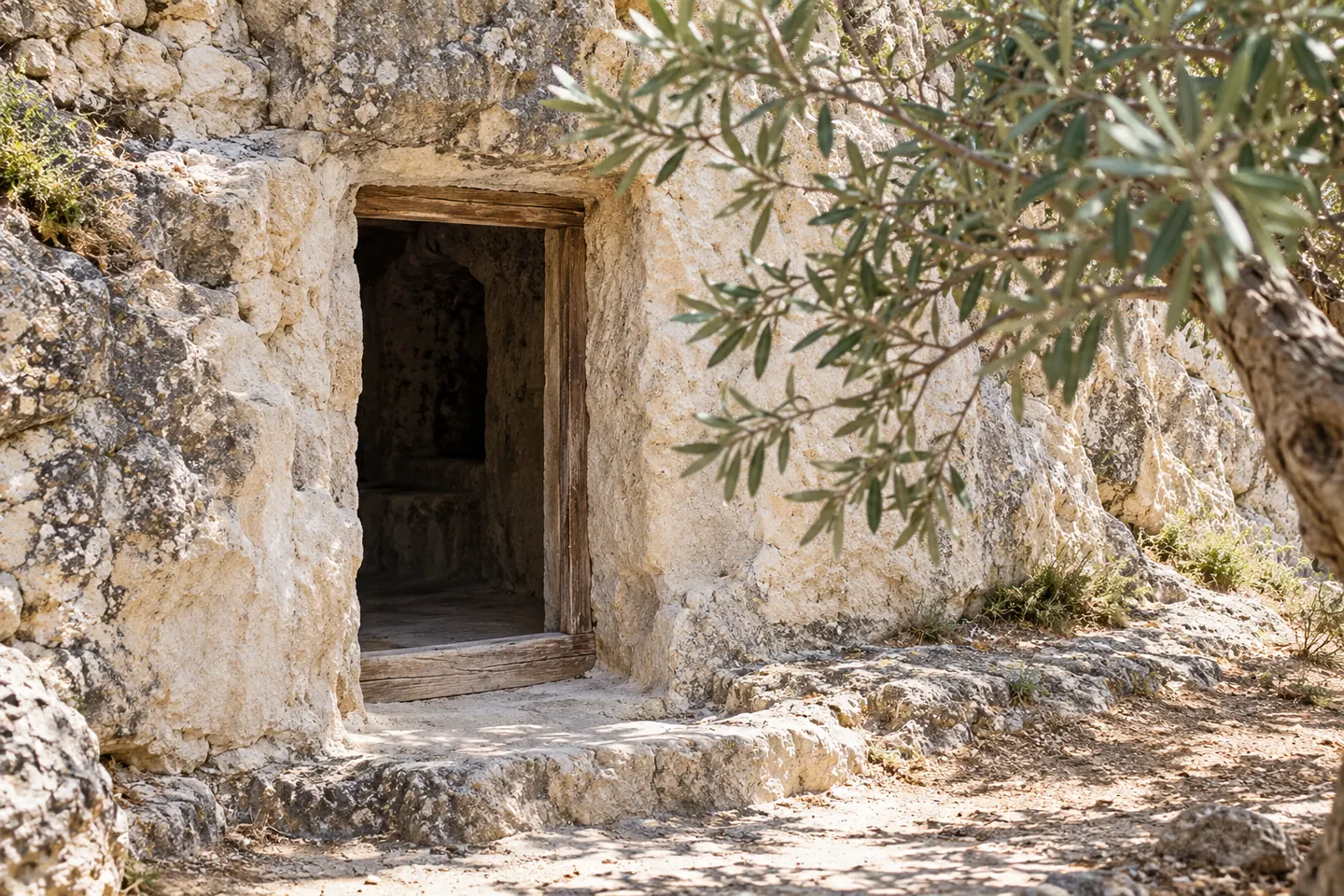
The monastery complex of Agios Ioannis Lampadistis is the village's main cultural landmark. It belongs to the UNESCO World Heritage site of painted churches in the Troodos region. Its different building sections and wall paintings deserve unhurried attention. Check visiting hours and any restrictions in advance, especially if the interior is your main reason for travelling.
It helps not to try to absorb every wall in full immediately. Choose a few depictions and ask about their meaning, arrangement and relationship to adjoining areas. Respect photography bans and keep away from delicate surfaces. Our guide to UNESCO World Heritage in Cyprus explains the church's place within the shared heritage site. The designation is not a blanket certification of all buildings or services in the village.
Bridge, lanes and traditional architecture
The Venetian bridge and historic watermill are among the village's well-known features. They show different links between landscape, transport routes and earlier economic life. Before a walk, decide which areas you actually want to visit. Not every sight lies along a continuously level path, and a bridge is not a reason to climb into the streambed away from the access routes.
In the lanes, look at materials, house entrances and terraces. Many buildings remain homes, guest accommodation or workplaces. Respect private courtyards and photograph people only with consent. Groups should keep narrow paths clear. Agree an easily recognised meeting point for breaks so that different walking speeds do not put the whole visit under time pressure.

Understand the springs and relaxation options properly
Kalopanagiotis is also known for its sulphur springs. This feature belongs to the village's history and shapes its image as a place of relaxation. It should not, however, be taken as a general recommendation to bathe in or drink natural spring water. Use only services explicitly intended and authorised for that purpose. Opening, access and services must be checked separately with a specific provider.
The village can be restful even without a wellness programme. A sufficiently long break with valley views and a short walk often complement a church visit well. Travellers seeking time together without a packed sightseeing programme will find more ideas in Cyprus for couples. What matters is whether your plan truly allows relaxation or simply squeezes a rest stop between long drives.
A sensible itinerary for half a day on site
Start with the stop whose access is least flexible in time. If the monastery is open, visit it first. Follow with a manageable village walk and then a longer break. Another short walk is optional, not essential. Keep the route back to your vehicle or agreed pickup point in mind.
- Clarify access and parking before travelling.
- Visit the main cultural attraction without time pressure.
- Choose a few lanes and a suitable valley crossing.
- Plan a seated break and a meal.
- Before adding more, check the weather and remaining driving time.
For people with limited mobility, agree specific routes beforehand. A nominally short distance says little about stairs, gradients or the effort required to return.
Kykkos, Kakopetria or just the valley?
Kykkos Monastery can be another focus for those with a strong cultural interest. However, it does not replace the independent significance of Agios Ioannis Lampadistis. If you want to visit both, allow enough time for mountain roads, different access arrangements and breaks. Two detailed monastery visits are more demanding than two quick photo stops.
Another option for comparison is Kakopetria in the Solea Valley. There, the focus would be more on the historic village centre and river landscape. Decide according to interest, not fame alone. With a long journey, choosing Kalopanagiotis as your only major village destination is often advisable. On a trip lasting several days, the valleys can be explored separately, allowing a more flexible response to weather and personal stamina.
When to visit and how to prepare for an enjoyable stay
In summer, remember water and sun protection despite the mountain location. Shade is not continuous along a route. In cooler weather, extra clothing and shoes with good grip are sensible. Wet paving can change your walking pace considerably. In wintry conditions, also check the roads you will actually use rather than relying on the weather at the coast.
If comparing several villages, our overview of Cyprus's most beautiful villages can help you choose. For Kalopanagiotis, your plan should above all provide three things: a realistic journey, enough time for the main cultural site and a walk that suits everyone. This creates your own impression of the village rather than a collection of brief stops.
Frequently asked questions: Kalopanagiotis
What should you visit first in Kalopanagiotis?
If culture is your main interest, plan Agios Ioannis Lampadistis first and check access. Lanes, the bridge and a break can follow. The exact order depends on opening and weather. For a first stay, a smaller area visited attentively is usually more useful than the most complete possible list.
Can you bathe in Kalopanagiotis's sulphur springs?
The springs' fame does not imply general permission to bathe or freely accessible bathing facilities. Check services explicitly intended for this purpose and their current conditions. Natural spring water should not be used without the relevant authorisation. The monastery, architecture and Marathasa Valley scenery make the village worth visiting even without a wellness service.
Can Kalopanagiotis and Kykkos be visited in one day?
This may be possible depending on your starting point and how thoroughly you wish to visit. Allow for mountain roads, access and breaks. If you want to explore both religious sites in detail, omit other village stops. With a long journey or limited walking ability, one focus often makes a more enjoyable day.
Sources and further information
Editorial update: . Check opening hours, access and transport connections with the relevant authorities before visiting.