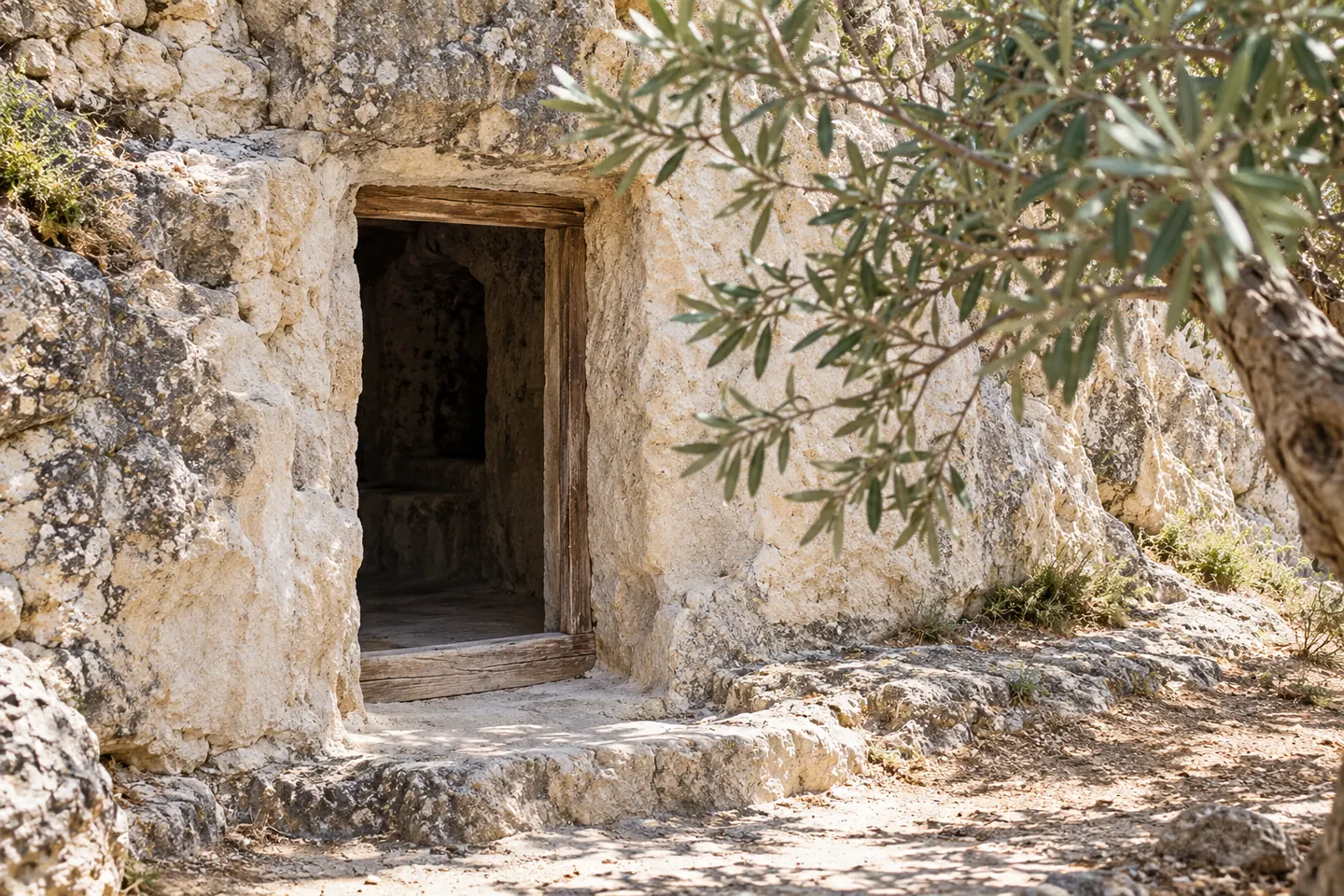
Cyprus has three entries on the UNESCO World Heritage List: Paphos, the Painted Churches in the Troodos Region and the Neolithic settlement of Choirokoitia. Behind these three names are several visiting sites and very different historical periods. Choosing by interest makes more sense for a holiday than trying to see everything in one day. Paphos suits ancient urban history, Choirokoitia early settlement life, and the Troodos churches Byzantine art. These differ from intangible cultural heritage entries, such as Lefkara’s lacemaking tradition.
Three entries, different types of heritage
A World Heritage entry is not always identical to one building or one admission ticket. Cyprus demonstrates this especially clearly: several geographically separate places can belong to a shared entry. For planning, therefore, check the actual site to visit rather than just the overarching name.
For an initial overview, distinguish periods and interests. Do you want to see how early communities organised settlements, how ancient homes were designed or how church paintings conveyed stories? This usually produces a clear priority. UNESCO status indicates cultural significance but does not replace personal choice. One thoroughly understood place often remains more impressive than three rushed visits.
Paphos: ancient city, mosaics and Aphrodite’s sanctuary
The Paphos World Heritage entry includes archaeological areas in Kato Paphos and Palaepaphos near Kouklia. The mosaics of ancient houses are particularly famous. Other architectural remains and the sanctuary associated with Aphrodite’s cult in Kouklia also belong. The Tombs of the Kings are likewise part of the World Heritage Site’s archaeological context.
Do not treat these areas as one compact walk. Choose a focus first. In the Archaeological Park, examine a few mosaics closely: which figures appear, how is a scene composed, and what effect did it have in a home? Adding Kouklia requires extra travel time. The name “Paphos” on the World Heritage List does not mean every place in today’s city has the same protected status.
The overview of Paphos and its sights helps you put together a city day.
Choirokoitia: insight into early settlement life
Choirokoitia, also known under alternative spellings, is an important Neolithic settlement. Remains of circular buildings and evidence of the organisation of an early community characterise it. Its appeal lies less in monumental façades than in how people lived, worked and organised everyday life here.
Move slowly through the site and try to distinguish individual floor plans. Which activities might have taken place indoors and which outside? On-site information and reconstructions help distinguish archaeological findings from modern illustrations. For children, this comparison is often more vivid than a sequence of long dates. Plan according to heat and actual paths; even a modest-sized archaeological site can be more physically demanding than a museum hall.
The detailed Choirokoitia visiting guide explains the difference between excavated remains and reconstructed round houses, and how to plan your walk.

The Painted Churches in the Troodos Region
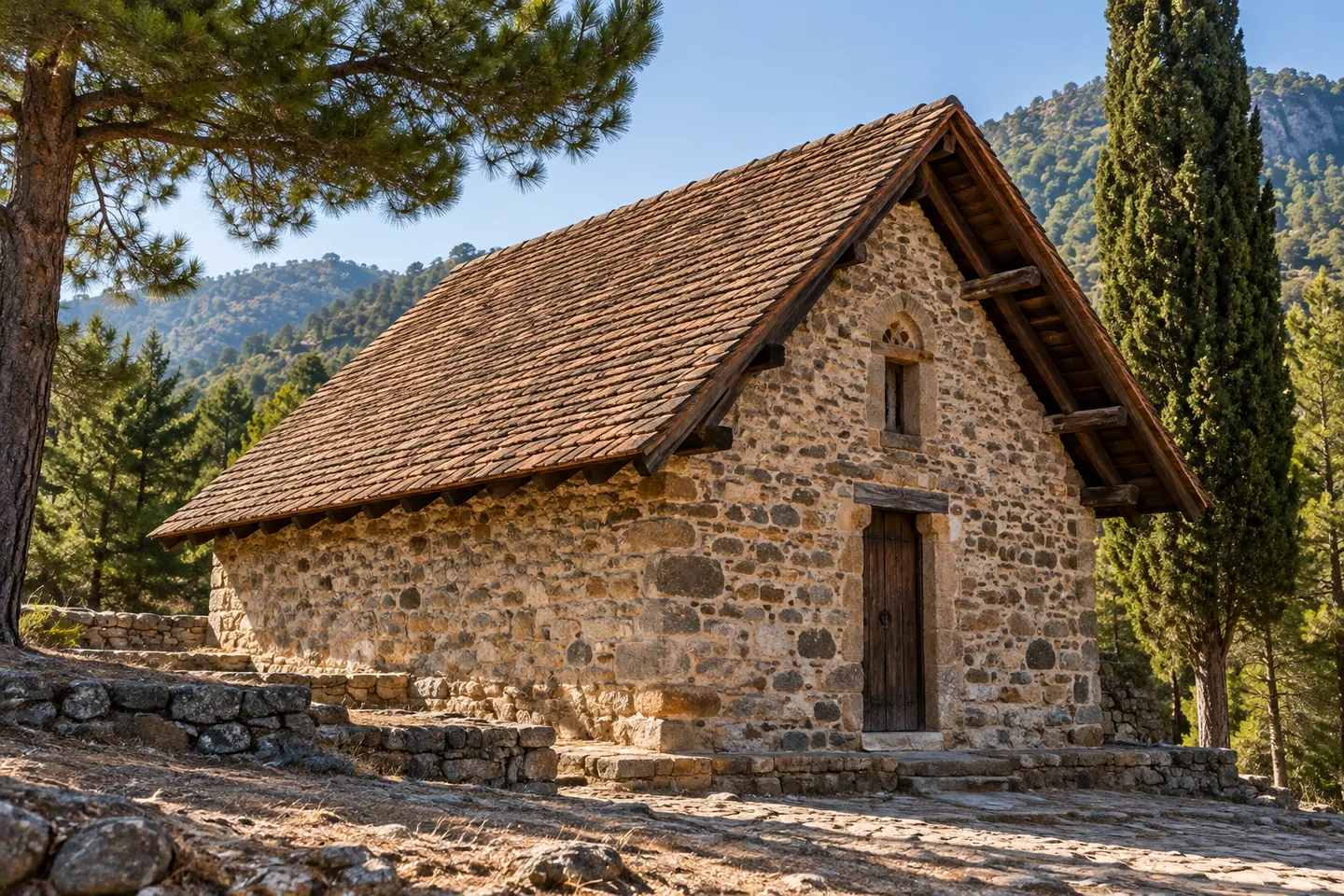
The shared World Heritage entry comprises ten churches or monastery complexes with significant wall paintings. They include Agios Nikolaos tis Stegis near Kakopetria and Agios Ioannis Lampadistis in Kalopanagiotis. The often modest exteriors and richly decorated interiors create a particularly appealing contrast.
For a first day, choose one or two churches within a sensibly drivable region. The complete group is not realistic for a short excursion. Ask about access and respect religious use, appropriate clothing and photography rules. Inside, first consider the arrangement of image panels before pursuing details. Do not touch wall paintings. A focused explanation of selected motifs is usually more helpful than trying to identify every scene immediately.
The Troodos travel guide provides regional orientation for travel and additions.
Understand Lefkara and other UNESCO terms correctly
The lace of Lefkara is on UNESCO’s Intangible Cultural Heritage list. This concerns knowledge, skills and the transmission of a craft tradition. It differs from a tangible World Heritage Site, where specific places and their exceptional significance are central.
Both types interest travellers. In Lefkara, conversations about methods and materials can make the cultural value particularly tangible. At a church, buildings, images and historical context take priority. Terms such as geopark also belong to separate programmes and should not be equated wholesale with the World Heritage List. Therefore, ask for the precise designation when a destination is advertised as a “UNESCO place”. This avoids misunderstandings and clarifies what to look for during your visit.
Three suggestions for a well-planned cultural day
Choose a regional connection rather than an island-wide collection of sites. The following suggestions are planning models to adapt to your starting location, weather and access.
| Focus | Main part of the day | Suitable addition |
|---|---|---|
| Antiquity on the west coast | One selected area in Paphos | Harbour break or another archaeological component |
| Early settlement history | Choirokoitia | A village visit within reasonable distance |
| Byzantine art | One or two Troodos churches | Mountain village and a quiet lunch |
In strong heat, visit open archaeological areas earlier. For mountain days, road layout and weather are important. Leave a proper break between visits. If you want to compare several periods, spread them across different holiday days rather than continually extending driving time.
Preparation and respectful treatment of sites
Before departure, check current access to the specific site. World Heritage status says nothing about whether every area is currently open or step-free. For limited mobility, precise questions about paths, seating and distance from the drop-off point are helpful.
Bring water and appropriate shoes, stay on marked paths and view archaeological finds where they lie. Churches also have religious rules and possible services. Photography should remain within what is permitted; a picture is no reason to obstruct other visitors. Read a brief introduction beforehand and note a question that interests you. This turns a famous sight into a place whose significance you can truly understand.
Frequently asked questions: Cyprus UNESCO World Heritage
How many UNESCO World Heritage Sites does Cyprus have?
UNESCO lists three entries for Cyprus: Paphos, the Painted Churches in the Troodos Region and Choirokoitia. One entry may include several components. The number of actual sites to visit therefore exceeds three. For planning, consider individual locations and their respective access.
Is Lefkara UNESCO World Heritage?
The craft tradition of Lefkara lace is recognised as intangible cultural heritage. It differs from Cyprus’s three tangible World Heritage entries. This does not turn the entire village into an additional World Heritage Site. For visitors, the tradition is especially interesting when its production and transmission are explained locally.
Can all Cyprus’s World Heritage be visited in one day?
A worthwhile, detailed visit to all entries and their components is unrealistic in one day. They lie in different regions, and the Troodos churches alone are spread over several locations. Choose one focus per excursion day and combine it with a nearby break or suitable village.
Sources and further information
Editorial update: . Check opening hours, access and transport connections with the relevant authorities before visiting.