Kykkos Monastery is one of Cyprus's important Orthodox monasteries and a rewarding excursion destination for culture enthusiasts. Its church, courtyards and museum offer different approaches to religious tradition and art. Because of its mountain location, Kykkos should be planned as the day's main focus, not a casual addition to many other places. Preparation should include the winding drive, suitable clothing and possible visiting restrictions. With enough time, you can explore the complex more calmly and distinguish historical tradition from the buildings visible today.
History: Byzantine foundation and later rebuilding
The foundation of Kykkos is dated to the reign of Byzantine Emperor Alexios I Komnenos. The monastery is associated with the veneration of an icon of the Virgin Mary. The story of the hermit Isaiah and the healing of the emperor's daughter belongs to religious tradition. It should not be equated with a historically documented account in the modern sense.
Several fires and reconstructions changed the complex over its history. The visible buildings therefore do not simply survive in full from the original foundation period. This distinction helps during a visit: you are seeing a religious place that developed over a long time. Pay attention to the furnishings, imagery and use of rooms, rather than assigning the whole appearance to a single century.
Which areas to choose deliberately
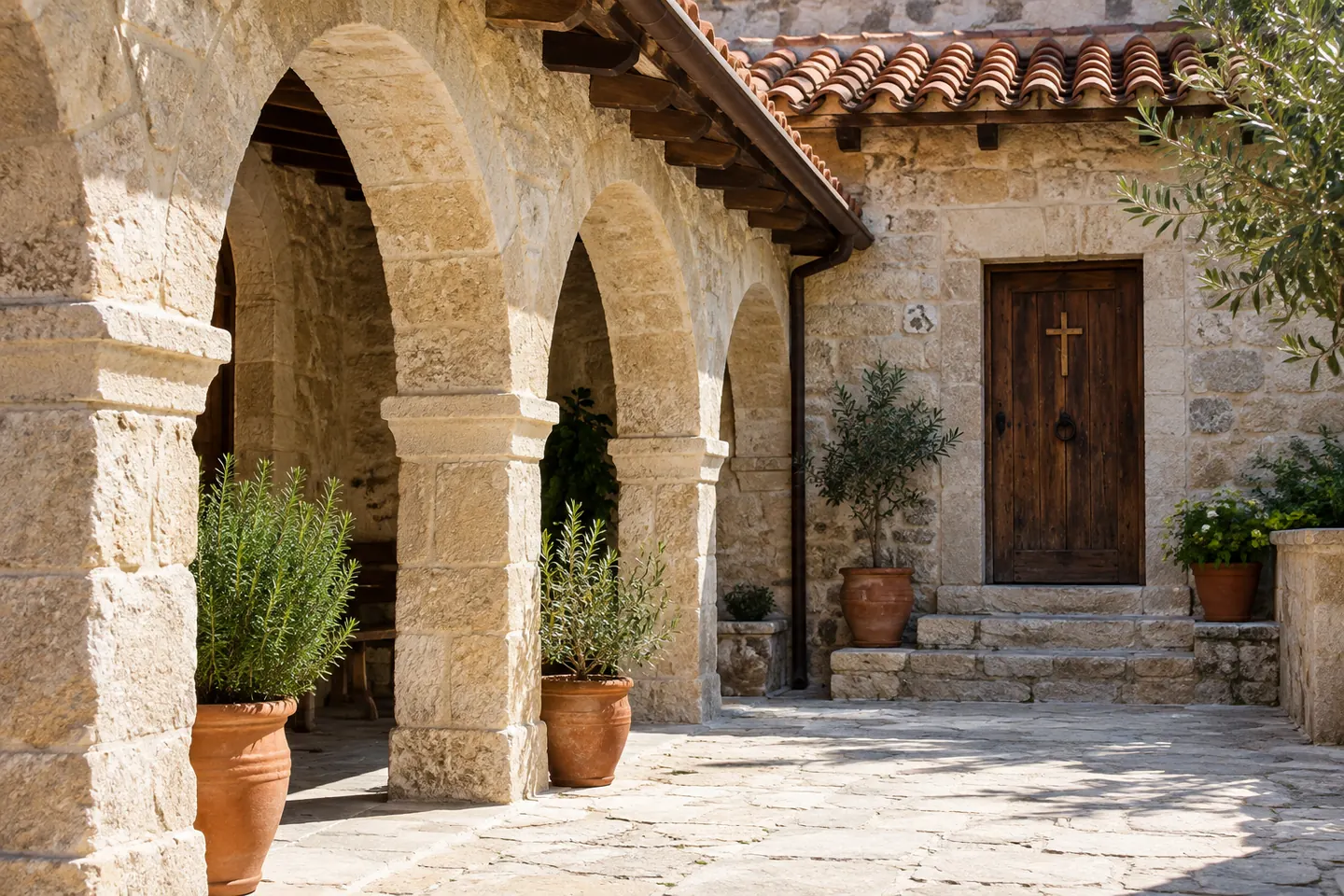
The church, accessible courtyards and museum appeal to different interests. In the church, religious significance comes first. Courtyards and corridors provide an overview of the complex. The museum adds collection objects and historical context. On arrival, check which areas are accessible that day and which order makes sense in view of any services.
On a first visit, you do not need to understand every detail immediately. Start with the relationship between monastic life, art and tradition. A limited selection viewed calmly is more pleasant than rushing through every room. With children, choose a simple question beforehand, such as why images are important in Orthodox churches and how a monastery differs from a museum.
The monastery museum as an addition
The museum preserves icons, liturgical objects, manuscripts and Cypriot antiquities, among other items. It can help place the monastery's furnishings in a broader cultural context. Allow a separate block of time for it. An extensive collection cannot usefully be treated as a quick final stop immediately before the return journey.
Check current visiting conditions directly with the monastery or museum. Admission and access may differ between areas; older travel accounts are not a reliable basis. If icons particularly interest you, choose a few works for closer viewing. Look for information on their date, material and use. Even without art-history knowledge, this creates a more concrete impression than simply photographing as many objects as possible.
Clothing, behaviour and photography
Kykkos is a religious site. Choose clothing that covers shoulders and knees, and shoes that let you walk safely on different surfaces. Do not assume suitable loan clothing is always available. If wearing summer clothes, bring an appropriate extra layer.
Speak quietly inside religious spaces and leave worshippers enough room. Take photographs only where permitted; rules may differ for the church, museum and outdoor areas. Flash, tripods or photographs of clergy may require separate consent. A closed gate or barrier is not an invitation to enter by another route. Respecting the site's actual use keeps the visit pleasant for others too.

Getting there: mountain roads rather than short map distances
The journey to Kykkos goes through the mountains. Starting point, bends, weather and planned breaks determine the effort more than a simple straight-line distance. Check the entire outward and return route before adding other destinations. If winding roads tire you quickly or cause travel sickness, allow extra breaks and a shorter day's programme.
When driving a rental car, consider left-hand traffic and narrower stretches. Drive defensively and stop for photographs only in suitable places. In winter, snow or ice can affect higher areas. Check current reports rather than relying on mild coastal weather. Without your own vehicle, you need a confirmed connection or an agreed transfer; do not assume spontaneous return transport will be available.
A day's itinerary with enough calm
Make Kykkos the main destination and limit the rest to a suitable break or one deliberately chosen place along the route. Access, weather and the return route should be clear before departure. On arrival, get your bearings first: which areas are open, when are religious activities taking place and how much time do you want for the museum?
- Start with a realistic journey plan and allow a break.
- Check access and rules on site.
- Visit the church and courtyards without rushing.
- Add the museum only with sufficient time available.
- Allow a rest before the return journey.
If you want to discover many Troodos attractions, spread them over several excursions. Kykkos, a long forest trail and several distant wine villages rarely make for a calm first day in the mountains.
Who will particularly enjoy Kykkos
The monastery suits travellers interested in Orthodox tradition, icons and Cyprus's cultural history. If you mainly want a short village walk or easy nature hike, nearer destinations may suit your plans better. The decision should not rest solely on Kykkos appearing on many lists of well-known excursion spots.
With limited mobility, clarify the exact paths, steps and entrances beforehand. A general mention of parking says nothing about whether all desired interiors are reachable. For children, a limited walk with understandable explanations is often better than a long succession of exhibition rooms. The overview of Cyprus's UNESCO World Heritage also helps distinguish Kykkos from the separately listed painted churches of Troodos.
Frequently asked questions: Kykkos Monastery
Is Kykkos Monastery part of the UNESCO World Heritage churches?
Kykkos is not the same as the UNESCO World Heritage site of the ten painted churches in the Troodos region. It is an important monastery with its own history and collection. If you specifically want to visit the listed churches, choose the individual monuments on the UNESCO list and check access separately.
What clothing is suitable for Kykkos?
Choose clothing covering shoulders and knees, and comfortable shoes for the visit. With summer clothing, pack an extra layer so you do not depend on borrowed clothing. Follow the notices on site too. Photography and some interiors may have their own rules.
How much time should you allow?
Alongside the visit, be sure to include the mountain journey from your actual holiday location. The church, courtyards, museum and a break each take time. Rather than a universal number of hours, a day focused on Kykkos makes sense. If time is short, consider a closer cultural destination.
Sources and further information
Editorial update: . Check opening hours, access and transport connections with the relevant authorities before visiting.