Agios Neophytos Monastery near Tala, north of Paphos, is particularly worth visiting for its rock-cut Enkleistra and its wall paintings. A visit comprises several distinct areas: the rock chapel, the later monastery church and the museum. Around one and a half to two hours is a sensible recommendation for an unhurried overview. Check the opening arrangements for each area beforehand and respect religious use and photography notices. The outing suits a focused morning of culture, followed by a relaxed break in the surrounding area.
What makes Agios Neophytos special
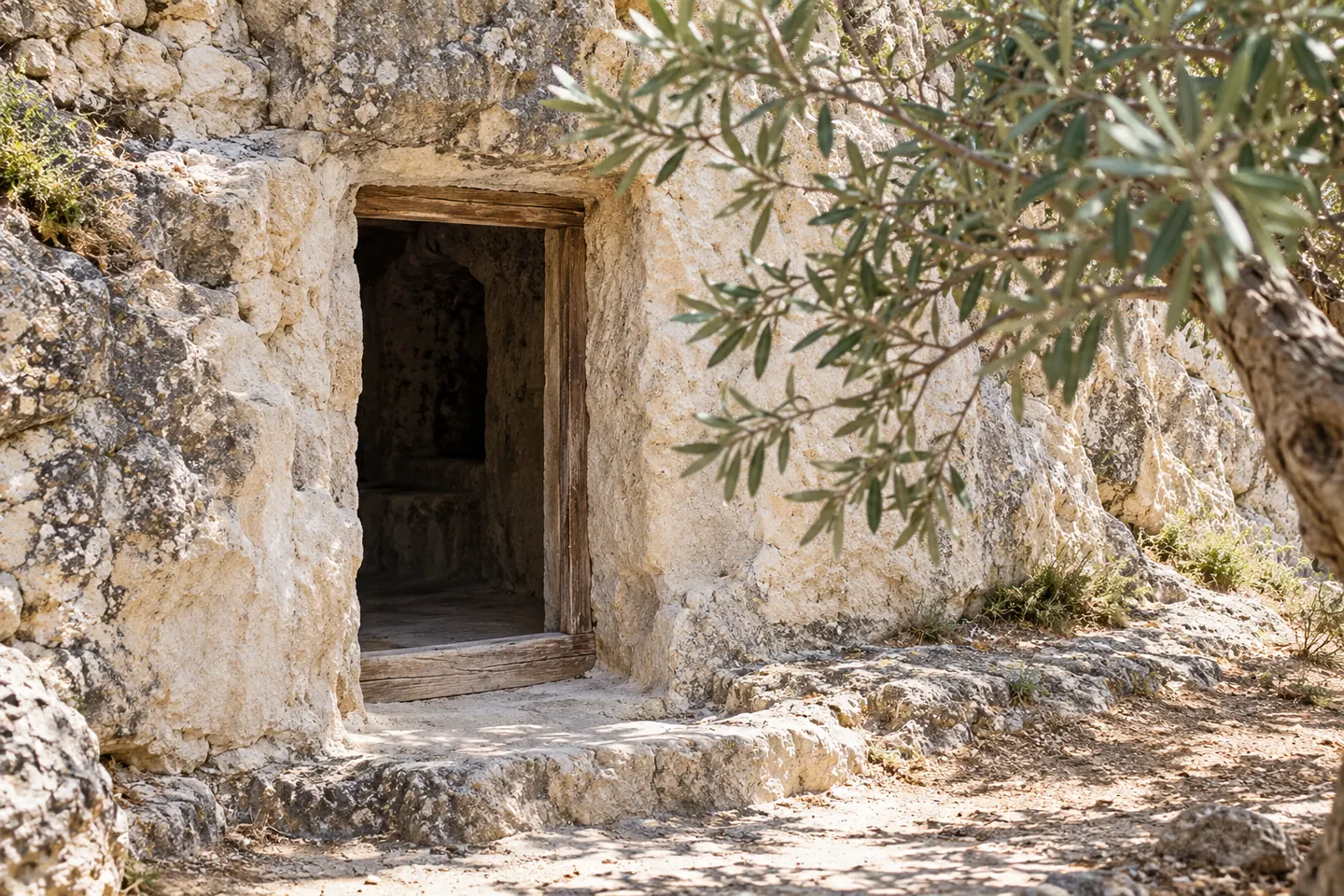
In the 12th century, the hermit Neophytos created a retreat in the rock. This was the origin of the monastery complex that can be visited today. Its special appeal lies in the contrast between the small rock-cut space and the later buildings. This is not a uniform complex created during a single period.
Begin by getting your bearings on the grounds: where are the Enkleistra, the main church and the museum? This distinction prevents the characteristic rock chapel from being equated with the entire monastery complex. For your visit, it matters more than memorising every construction phase. Notice the different scales: solitary retreat on one side, communal religious life on the other. This offers an accessible way into the history, even if you have little experience of church art.
Viewing the Enkleistra and its frescoes
The Enkleistra is the retreat carved into the rock, with wall paintings dating from different medieval periods. Small rooms in particular reward slow observation. Leave room for other visitors and give your eyes a moment to adjust to the light.
Start by choosing a group of images and look at their arrangement, gestures and relationship to the shape of the room. Read any explanations before confidently identifying individual figures. The paintings are delicate historic surfaces: do not touch painted walls or adjacent areas to steady yourself. Follow the on-site rules on photography and flash. If photographs are not permitted, you can note a few keywords and read up on your impressions later. The value of your visit does not depend on taking your own interior photograph.
Distinguish between the main church and museum
The later monastery church and museum complement the Enkleistra but do not replace it. In the church, religious use takes priority; the museum offers a different way of viewing ecclesiastical objects and collection pieces. Check not just whether the monastery grounds are open, but which of these areas can actually be visited.
A good order of visits depends on current opening hours and possible breaks. Ask when you arrive and start with the area whose visiting window is limited. A museum tour can be shorter or more detailed depending on your interest in individual objects. Compare a few pieces carefully rather than glancing at every display case. Families could look for different materials or uses, for example. This turns a collection into an understandable complement to the building you have just seen.

How to plan a relaxed half-day excursion
One and a half to two hours is a sensible starting point for the Enkleistra, church and museum. Those wishing to explore art history in more depth will stay longer; restricted access may make the visit shorter. Add outward and return travel and a break separately. A half-day excursion need not be filled to the last minute.
From Paphos, the visit combines well with a relaxed meal or a short walk. If you also want to see the Paphos mosaics, set a clear priority: visiting both places thoroughly without a break requires considerable attention. An alternative is to spread them over different days. The general overview of Paphos and its sights helps you distribute culture, coast and relaxation appropriately throughout your stay.
Clothing, conduct and accessibility
Wear clothes that cover your shoulders and knees, and remain quiet in church spaces in use. This is a religious site; services or other internal activities may take priority over sightseeing. Ask before photographing people or private areas. Eating and longer conversations belong in suitable outdoor areas.
If you have limited mobility, specific information about paths, steps and individual entrances is needed. Saying that a monastery can be reached does not automatically mean that a small rock-cut room is easily accessible too. Discuss your requirements before travelling. The packing list for beach and cultural days in Cyprus offers guidance on what to bring. A light extra layer, comfortable shoes and water are usually more practical than extensive luggage.
When the visit fits particularly well
This excursion suits travellers looking for a manageable cultural site with time to observe. It can provide a deliberate change of pace during a beach holiday; for a very short stay, choose it according to your personal interests. Someone mainly interested in ancient excavations may have different priorities from someone drawn to Byzantine art.
A cloudy day can be pleasant, but the site is not automatically a fully weatherproof activity. Outdoor paths connect the different areas, and surfaces can become slippery in rain. In summer, allow for even short walks in the sun. For more monastery experiences, the article on Kykkos Monastery in Troodos offers a comparison. Kykkos is in a different excursion region, however; the two sites should not be squeezed into an overloaded day simply because they share a theme.
Discover more with a good question
Before your visit, consider what you especially want to understand: the life of a hermit, the design of the frescoes or the development of a monastic community. A clear question focuses your attention and helps connect the different areas meaningfully. Afterwards, you can summarise the answer in a few sentences rather than simply having a series of photographs.
A concrete comparison works well with children: which rooms feel small, which communal, and which especially richly decorated? Allow space for observations without immediately correcting every impression. Adults also benefit from describing first and evaluating afterwards. At the end, consider whether you really need another sight. A break overlooking the surroundings can round off the monastery visit better than a rushed extra stop.
Frequently asked questions: Agios Neophytos Monastery
What is the Enkleistra of Agios Neophytos?
The Enkleistra is Saint Neophytos's retreat carved into the rock, with important medieval wall paintings. It is a separate part of the site and should not be confused with the later main church. On arrival, ask about access and the rules protecting the delicate interiors.
Do the monastery and museum need separate time?
Yes, the site comprises several areas, each with its own character and potentially different visiting conditions. Do not plan only a glance inside the church if you are coming mainly for the rock chapel. Around one and a half to two hours is a helpful guide for a relaxed overview, plus travel and a break.
Is Agios Neophytos worthwhile without a religious interest?
The visit can also be interesting for its rock-cut architecture, frescoes and historical development. A willingness to look attentively matters more than prior religious knowledge. Still respect its use as a monastery. Anyone mainly expecting entertainment or a long walk should complement the excursion with another activity that day.
Sources and further information
Editorial update: . Check opening hours, access and transport connections with the relevant authorities before visiting.