In Cyprus, traffic drives on the left. For visitors from Germany, adjusting when turning, after breaks and at junctions is especially important. A hire car is nevertheless not essential for a varied stay: depending on your resort, walking, buses, transfers and private excursions can be combined. Decide according to your driving experience and planned routes. This travel guide helps you prepare and identifies typical situations, but replaces neither local signs nor a practical introduction to the vehicle you collect.
What changes compared with driving in Germany
The main difference is driving on the left. Many rental cars have the steering wheel on the right; check the actual vehicle when collecting it. This changes your viewing angles and how you judge distance on the vehicle's left side. Some controls may also feel unfamiliar. Before setting off, take time to adjust your seat and mirrors and locate the lights and windscreen wipers.
The challenge often lies less in steady driving than in brief moments of decision. After refuelling, when leaving a car park or on an empty side road, familiar habits can return. Before every fresh start, consciously remind yourself which side of the road to use. A calm reminder from a passenger can help; rushed last-minute instructions do not.
Keep your first drive deliberately simple
Ask the rental company to show you the main functions and set up navigation before driving. Check that your phone is securely mounted and can be used hands-free. An automatic car can simplify operation if you would otherwise have to change gears with an unfamiliar hand. It does not, however, remove the need to pay attention to traffic.
Do not plan a particularly demanding first route after a long flight. Arriving in daylight and having a clearly defined route to your accommodation can make the start easier. If you are exhausted or feel overwhelmed when setting off, a transfer is a sensible alternative. Avoid having to learn an unfamiliar city, hectic traffic and all the vehicle controls at the same time.
Prepare calmly for turns and roundabouts
When turning, your vehicle must end up on the left side of the new road. Right turns in particular require conscious orientation because they may cross oncoming traffic. Follow lanes and markings and do not let other vehicles pressure you into a quick decision. If you miss a turn, continue until you reach a suitable, permitted place to turn around.
Traffic moves clockwise in roundabouts. Pay attention to entry signs, lane allocation and vehicles already in the roundabout. The correct lane depends on markings and your intended exit; a blanket rule for every multilane roundabout would be unreliable. Reduce simultaneous tasks: your companion can announce the next exit early while the driver watches traffic.
Speed, distance and road conditions
Official tourism information confirms that distances and speeds are signposted in kilometres and kilometres per hour. Follow local limits and drive only as fast as visibility and the road allow. A permitted maximum speed is not a recommendation to use it in every situation. Anticipatory driving is especially helpful before bends, narrow village streets and unfamiliar junctions.
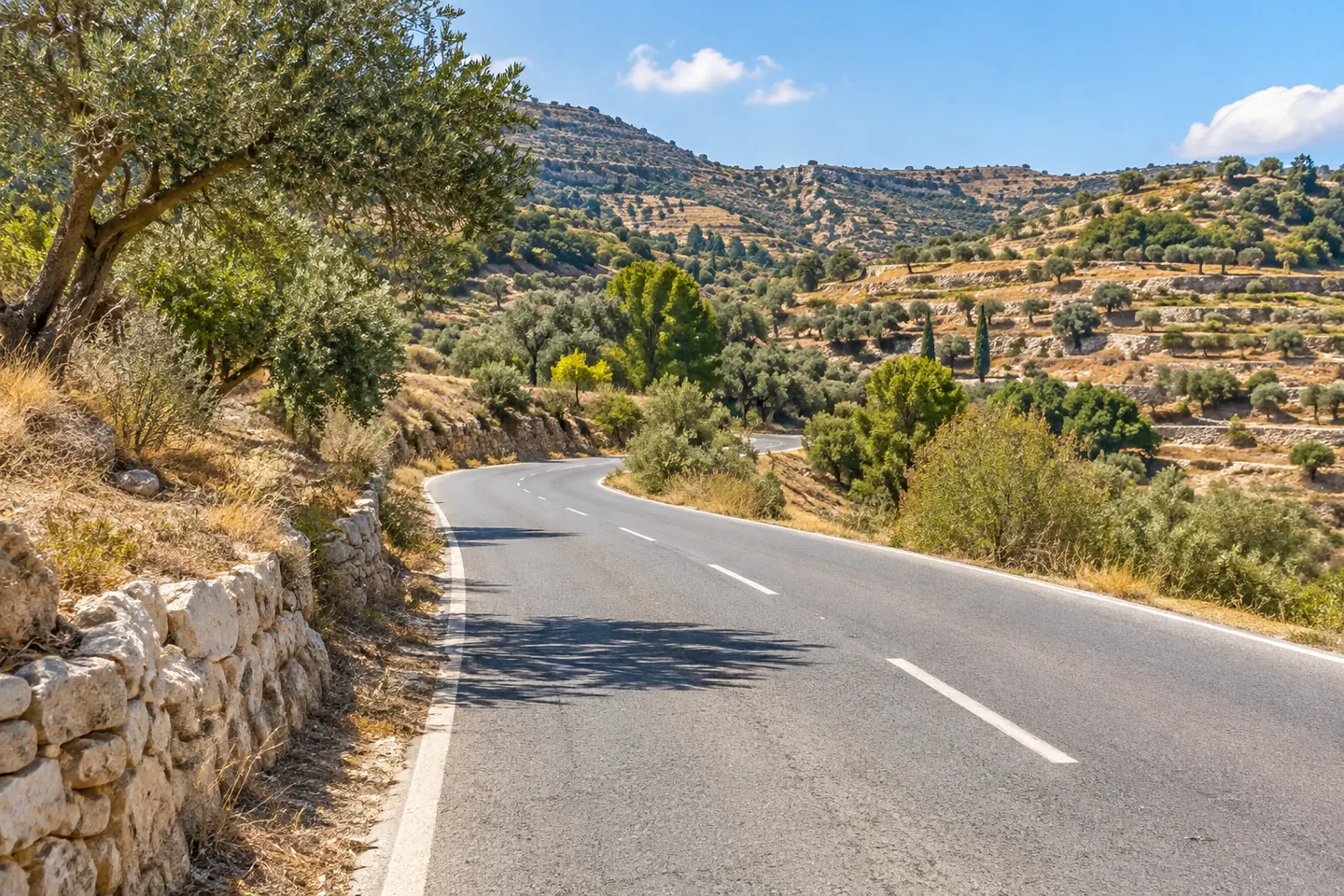
Mountain roads have different practical demands from routes between coastal cities. Bends, gradients and narrow sections may require greater concentration. In winter, snow or ice may occur at higher elevations. Unpaved access roads are not automatically suitable for your rental car or permitted by the contract. Check the actual route, not just the shortest navigation suggestion.

Check the rental agreement and northern excursions separately
At pickup, check the agreed insurance, excesses, deposit and permitted driving areas. Document existing damage according to the rental company's instructions. Ask what to do in a breakdown and keep contact details handy. A clear overview of the contract is more useful than assuming a package with a comprehensive-sounding name covers every conceivable situation.
Crossing the Green Line requires additional checks. The German Federal Foreign Office points to the need for the rental company's consent and separate insurance questions. Additional third-party liability cover is not the same as cover for damage to the rental car. Clarify this in writing before booking or travelling and check current official guidance. The guide to crossing in Cyprus covers this travel planning in more detail.
Adjust your habits on foot and by bicycle too
Left-hand traffic affects more than drivers. When crossing a road, deliberately check both directions rather than relying only on the first glance you are used to in Germany. Use existing crossings and watch for turning vehicles. A brief moment to orient yourself is especially worthwhile outside hotels, at bus stops and when getting out on an unfamiliar side of the road.
Cycling combines traffic, road layout and possibly heat. A scenic route is not automatically a relaxed ride for inexperienced cyclists. Ask for a suitable route recommendation and check actual conditions. If your main wish is to enjoy the landscape, getting around does not also have to become the day's hardest task.
Which alternatives to driving yourself are suitable?
Choose accommodation according to the journeys you want to make daily. An easily reached beach, restaurants and shops reduce the need to drive. Buses may work for larger towns; check current routes, stops and return options directly with the transport company. For remote villages or several stops in one day, planning solely around buses is often more complicated.
- Short city journeys: stay centrally and walk suitable routes.
- Individual connections: arrange a confirmed transfer or taxi in advance.
- Several excursion destinations: choose an arranged journey with a driver and a clear route.
- A mixed holiday: use a vehicle only on the days you actually need it.
Compare cost and comfort across your entire stay. You need neither drive yourself every day on principle nor rule out a rental car altogether. What matters is which solution lets you travel attentively, relaxed and with realistic daily stages. Further route tips are available in Cyprus without a rental car.
Our guide to the holiday budget for Cyprus explains how to make a suitable cost calculation.
Frequently asked questions: driving on the left in Cyprus
Does traffic drive on the left throughout Cyprus?
Yes, the German Federal Foreign Office describes left-hand traffic in Cyprus. Local signs, markings and traffic rules remain decisive for your specific journey. Pedestrians should also account for the unfamiliar direction and check both ways before crossing. Allow enough time after arrival to adjust to the traffic situation.
Do German holidaymakers need an international driving permit?
The German Federal Foreign Office states that German driving licences are recognised for tourist stays. Also check your rental company's conditions, such as required documents, age limits and payment methods. These contractual requirements may go beyond general recognition of the licence. For other nationalities or a non-German licence, check the relevant information separately.
Is a holiday in Cyprus possible without a rental car?
Yes. With suitable accommodation, daily journeys and occasional excursions can be organised without your own vehicle. Your destinations are decisive: a week in a city requires different transport planning from daily visits to remote villages. Combine walkable destinations, verified bus connections and prearranged journeys. This way, you do not have to go against your personal comfort with driving.
Sources and further information
Editorial update: . Check opening hours, access and transport connections with the relevant authorities before visiting.