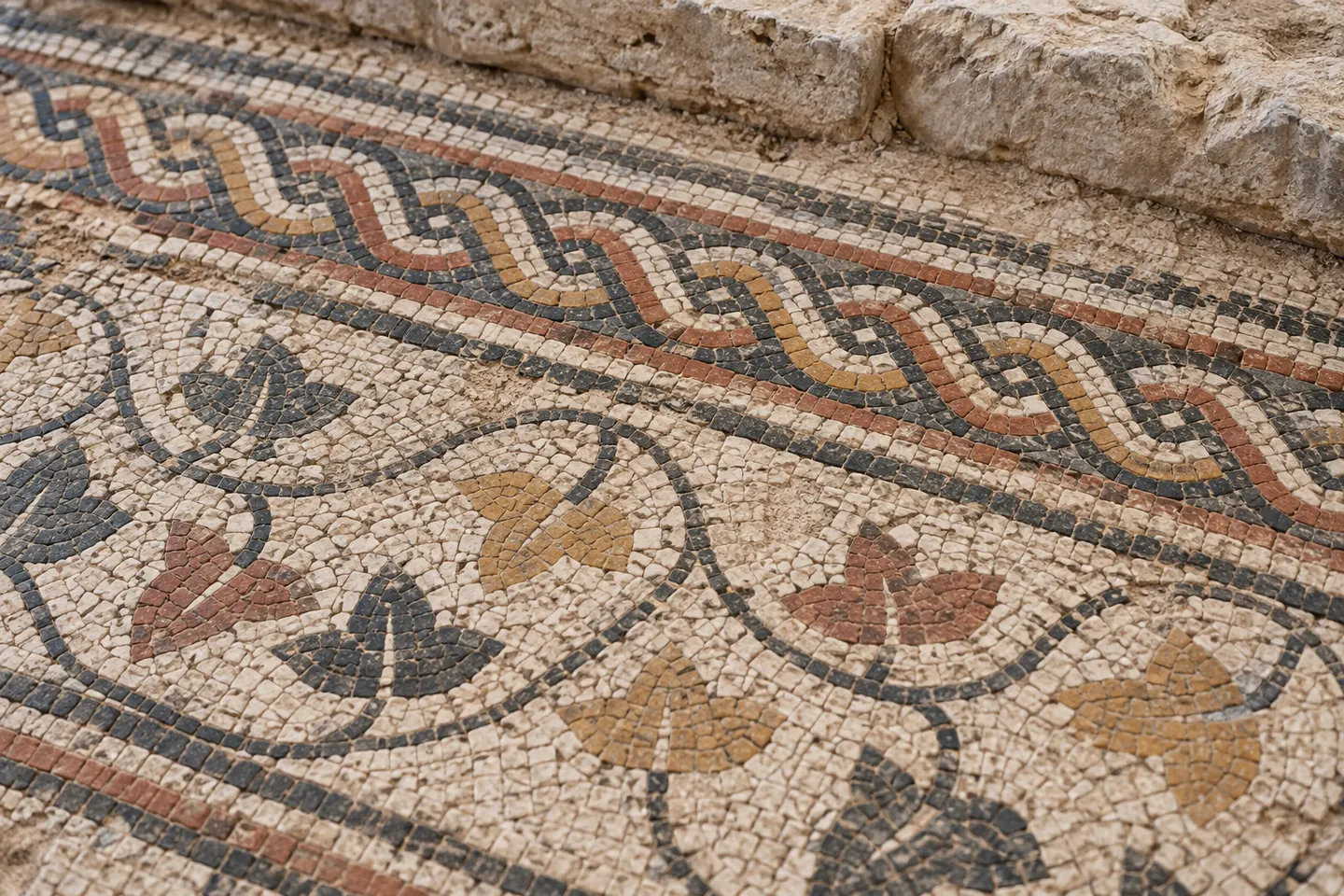
The Paphos mosaics are part of Kato Paphos Archaeological Park near the harbour. The surviving floor pictures with mythological scenes are particularly rewarding: they show how elaborately prestigious Roman-period living spaces were decorated. For a focused walk concentrating on the mosaics, around two to three hours is a sensible recommendation. Deliberately choose a few panels rather than briefly photographing every motif. The park is larger than the roofed mosaic areas; expect exposed paths and sunshine between stops.
Why the mosaics are more than beautiful floor pictures
The famous panels belonged to residential complexes in the Roman city. Their subjects draw on Greek myths, animals and scenes of human activity. These elaborate floors contributed to the rooms' atmosphere and were seen from different directions. Alongside the figures, therefore, consider the picture's position in the floor plan.
A good starting point is one motif that you first examine without an explanation. Which figure is central, where do people turn, and which colours draw your eye? Read the label afterwards. You can then see what the image itself communicates and what additional information you need. This makes the visit understandable without deep knowledge of ancient mythology. Nobody needs to recognise every god and hero before travelling.
Dionysos and Theseus: two useful focal points
The House of Dionysos includes mythological scenes, hunting and wine motifs. The House of Theseus takes its name from the scene of the fight with the Minotaur. These labels help orientation but do not mean the mythological figures lived there. They are modern names for archaeological excavation areas.
In each area, first choose one main motif, then a detail such as a border, animal or figure's posture. Notice how small stones create outlines and gradations. This helps avoid the fatigue that can follow many similar photo stops. If conservation work restricts certain paths or panels, adapt your order. The orientation provided at the entrance and current route signs take priority over a rigid list.
Aion and Orpheus: read visual stories carefully
Other well-known excavation areas bear the names Aion and Orpheus. The Aion mosaic combines several mythological scenes in separate panels; in the House of Orpheus, the singer surrounded by animals is a central motif. These images reward a closer look at the relationships between the figures.
Break your observation into short steps: first the whole picture, then a group and finally a detail. If particularly interested, note a keyword for a motif you want to explore later. Do not try to memorise every label in full. To compare different aspects of ancient life, a separate visit to the Tombs of the Kings in Paphos adds another perspective to domestic culture. Both places, however, need their own time and travel.

A walk that fits the time available
With around two hours, concentrate on the open main mosaic areas and allow enough walking time between them. With more time, add other parts of the park. The aim is an understandable impression of the ancient city, not ticking off everything. A long lunch break should not be counted as actual sightseeing time.
Start with the house that matters most to you, if access is available, then follow the signposted paths. The overview of Paphos's sights helps with the rest of your day. The harbour, a meal and a quiet walk often fit better afterwards than immediately visiting another major archaeological site. Decide in advance which extra stop can be dropped if it is hot or you become tired.
Assess heat, paths and accessibility realistically
Some mosaics are in protected display areas, but walking through the park is not a continuously air-conditioned museum visit. Bring water and, where possible, plan exposed sections for a comfortable time of day. Sun protection and sturdy, comfortable shoes are more useful than a large bag of unnecessary equipment.
Official information describes the site as partially wheelchair-accessible. This does not mean all paths and viewing points are equally accessible. Ask beforehand for a suitable route and consider surfaces, distances and possible detours. Families with young children should limit the scope. General advice on Cyprus with children helps with daily planning; on site, the needs of the youngest or least mobile person remain a better guide than the number of monuments planned.
Discover mosaics with children or without prior knowledge
For a family visit, small search tasks work better than a long lecture. Find an animal, a striking border or two figures whose relationship you want to explain. Let children describe what they see first, then add the mythological context. Keep tasks short so the excursion does not become a school lesson.
Adults without prior knowledge can use the same method. Compare two images by mood, movement and colour rather than immediately judging their historical significance. A simple sketch on paper can be more lasting than many similar phone photographs. Do not touch the mosaics and stay on designated paths. Local rules apply to photographs; tripods, special equipment or commercial photography may have different requirements from private souvenir pictures.
Admission, World Heritage and useful preparation
The official visitor page lists seasonal opening hours, fees and special closing days. Check these shortly before visiting, especially on public holidays or for a late-afternoon arrival. Include the walk from the car park or your accommodation to the entrance. A longer queue should not consume the time set aside for your main motifs.
Paphos has been on the UNESCO World Heritage List since 1980. The mosaics are an important part of this cultural context, but the World Heritage Site encompasses more than the individual panels. The travel guide to UNESCO World Heritage in Cyprus explains the context. Three preparations are enough for your visit: choose priorities, check current visitor information and leave enough time. One well-understood motif often stays in memory longer than an overwhelming collection of dates.
Frequently asked questions: Paphos mosaics
Where are the Paphos mosaics?
The famous mosaics are in Kato Paphos Archaeological Park near the harbour. They are spread across several excavation areas rather than one single room. Allow time for walking between stops as well as looking. Information on accessible areas is available at the entrance and through current visitor information.
Which mosaic should you see first?
There is no universally correct order. The Houses of Dionysos and Theseus provide accessible starting points, provided the relevant areas are open. First choose one main motif and examine it calmly. Your interests, visitor numbers and current routes matter more than a supposedly obligatory circuit.
Is one hour enough for the mosaics?
One hour allows only a limited selection and leaves little time for explanations, walking and breaks. For a focused, relaxed visit, around two to three hours is the better planning recommendation. If you can only stay briefly, choose your focus beforehand and give up the aim of seeing the entire park.
Sources and further information
Editorial update: . Check opening hours, access and transport connections with the relevant authorities before visiting.