
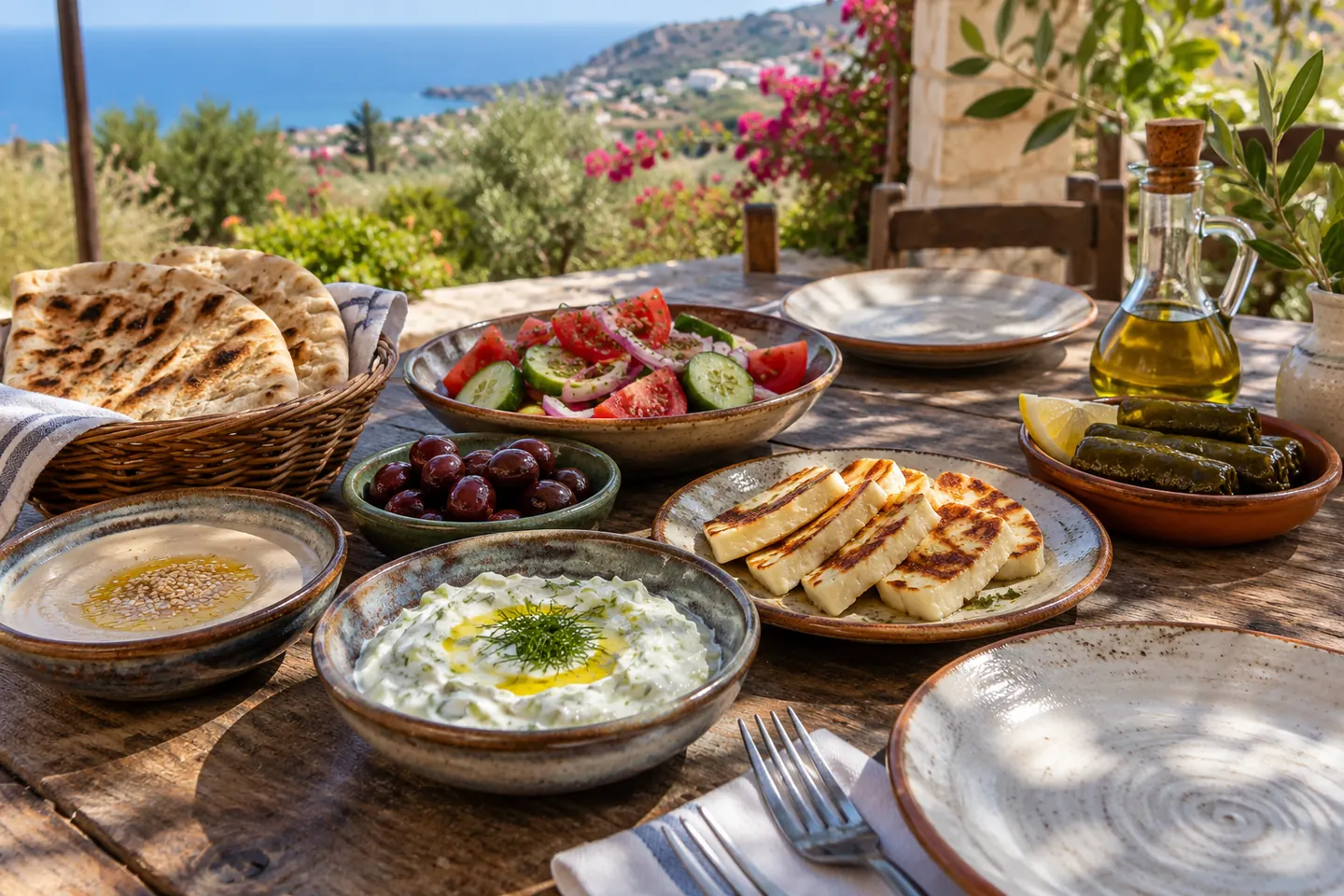
Cypriot cuisine combines vegetables, pulses, olive oil, cheese, meat and fish with influences from the eastern Mediterranean. Well-known specialities include halloumi, souvla, kleftiko and numerous small dishes served together as meze. For a first impression, a thoughtfully chosen taverna meal is often more useful than a long list of individual dishes. Also try bakery goods and regional products. This introduces different sides of the cuisine without turning every meal into an extensive tasting.
Halloumi, anari and small dishes to begin with
Halloumi is Cyprus's best-known cheese, found at breakfast as well as on the grill. If possible, try different preparations instead of judging it only by the grilled version. Anari is a different cheese made from whey and also used in various dishes.
Small portions with bread, olives, salad and a dip make a good first meal. Notice the difference between an individual dish and a full meze order: a substantial meze plus several main courses is often too much. If you cannot decide, ask for two or three typical dishes in suitable quantities. The point is not to tick off as many names as possible, but to appreciate flavour and preparation.
From the grill and oven: souvla, souvlaki and kleftiko
Souvlaki means small pieces of meat on skewers; souvla uses larger pieces slowly cooked on a spit. Kleftiko refers to slow-cooked meat, often lamb. Other examples include sheftalia, seasoned meat parcels wrapped in caul fat, and stews such as stifado. Exact preparations vary between kitchens and establishments.
A simple question helps when ordering: which dishes are freshly prepared today, and which need advance notice? Slow-cooked dishes in particular are not necessarily always available. If you are not very hungry, share a suitable portion and add vegetables or salad, if offered. Ask about the ingredients instead of choosing solely by a familiar-sounding name. This helps you discover something new while ordering to suit your appetite.
Vegetables, pulses and vegetarian eating
Cypriot cuisine is not only grilled meat. Beans, lentils, vegetable dishes, stuffed vine leaves and salads can provide a varied foundation. However, a vegetable name does not automatically imply a vegetarian or vegan preparation: stock, filling, cheese, yoghurt or butter may be included.
Describe exactly what you do and do not eat. Asking “without meat, fish and meat stock?” is often clearer than simply “vegetarian?”. For vegan requirements, also discuss dairy products and eggs. When choosing several small dishes, include something filling such as pulses, not only salad and bread. For a longer excursion break, advance arrangements help ensure enough suitable choices are available.
Choose fish and seafood thoughtfully
A waterfront restaurant does not automatically serve only local catches. If interested, ask about origin, the day's selection and preparation. For whole fish, clarify whether the quoted price is per portion or by weight. Have the expected total explained before ordering.
A fish meze may contain different preparations and seafood. Mention any ingredients you dislike or cannot tolerate at the start, because dishes are often shared. For families, a clearly agreed selection of easily portioned dishes is often simpler than a very extensive menu. Eat slowly and order more if needed. This is more pleasant than taking on too much with a large initial order.

Discover bakeries, grape products and sweets
A bakery is a good counterpoint to a long taverna meal. Depending on the selection, you may find pastries with olives, cheese or pumpkin. Ask about fillings and choose a small selection for your first taste. On excursion days, suitable baked goods can serve as a snack without replacing lunch in advance.
Well-known sweets include loukoumi and soutzoukos, in which nuts are coated in a thickened grape preparation. Preserved fruit served as spoon sweets and regional honey products broaden the choice. With a nut allergy, check ingredients and possible contact during production. If taking products home, consider packaging, shelf life and storage conditions. A food you want to enjoy at home may need more care than a souvenir requiring no refrigeration.
Cypriot coffee suits such a break: the dedicated article explains ordering by sweetness, drinking slowly and the role of the kafeneio.
Put together a sensible culinary itinerary
For a day of local flavours, choose one main theme: cheese and village life, wine and mountain villages, or a mix of market and taverna dining. One producer visit with explanations can teach more than several brief retail stops. Clarify beforehand whether you will actually see production, only taste products, or do both.
- Morning: a craft or agricultural visit with time for questions.
- Lunch: a relaxed meal with a few carefully chosen specialities.
- Afternoon: a village walk and, if interested, a small additional tasting.
This is a suggested day plan, not an established local tradition. Leave enough time between substantial tastings. With children or guests who want to eat little, a shorter activity is often a better addition than a second large meal.
Order clearly, clarify allergies and enjoy a relaxed meal
A good culinary experience begins with a clear order. Ask about portion sizes, included sides and any minimum order. For meze, know whether pricing is per person and which drinks cost extra. For a dish sold by weight, the price should be transparent.
Allergies are more than a matter of taste. Name the specific ingredient and, where relevant, ask about shared preparation. A short written translation can reduce misunderstandings. If a business cannot give a clear answer, choose another suitable option. Do not plan to drive yourself after a wine tasting. Water, an unhurried pace and a pleasant seated break help keep the meal part of a lovely holiday day rather than an obligation.
Frequently asked questions: Cyprus food specialities
What should you definitely try in Cyprus?
A good start is halloumi, a grilled or oven-cooked dish, a vegetable or pulse dish and a local sweet. A meze can combine several impressions. Choose according to your taste and dietary preferences; a speciality does not improve simply because you order it against your own preferences.
Is Cypriot food suitable for vegetarians?
There are many suitable ingredients and dishes, including pulses, vegetables, salads and cheese. However, check the specific preparation, because stock, fillings or sauces may contain animal ingredients. Explain your requirements precisely and clarify which dishes are actually suitable before placing a large meze order.
How can you combine an excursion with regional food?
Choose a theme and reserve a sufficiently long lunch break. A producer visit, followed by a village walk and a selected taverna meal, creates a coherent day. Ask beforehand whether production will be demonstrated. Several large tastings immediately one after another are usually less enjoyable.
Sources and further information
Editorial update: . Check opening hours, access and transport connections with the relevant authorities before visiting.