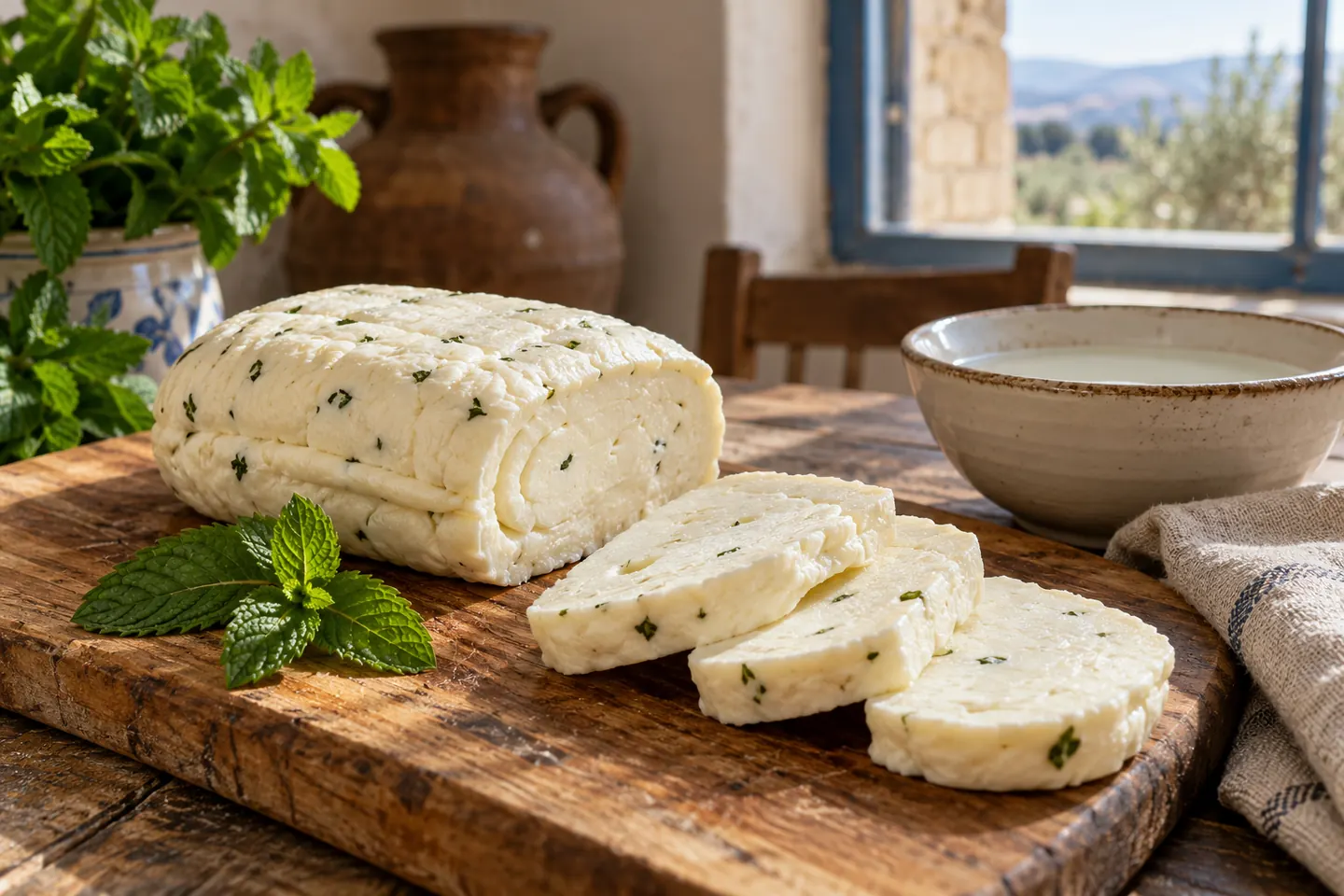
In traditional halloumi making, milk is first turned into curds, then shaped and pressed; characteristic steps include heating the cheese portions in whey, then salting and folding them, often with mint. A producer visit brings these stages to life and expands on the familiar image of grilling cheese. When planning, distinguish between a demonstration, a hands-on activity and a tasting only. Ask beforehand what will actually be shown. The visit can then combine well with a village walk and a meal.
What makes halloumi distinctive
Halloumi is a white, semi-firm cheese used in a variety of dishes in Cyprus. It can be eaten cold or prepared in other ways as well as grilled. Its characteristic texture makes comparing freshly served and grilled versions particularly interesting.
The name Halloumi, or Hellim, is registered in the EU as a protected designation of origin. Recognition applies to a product made in Cyprus according to specified requirements. It does not mean that any grilling cheese has the same origin or production method. When shopping, therefore, check the labelling and producer. During a visit, it is even more interesting to hear how the business works and how its different varieties compare.
The production process in clear steps
Rennet turns the milk into curds, which are separated from the liquid whey. Shaping and pressing remove more liquid. The cheese portions are then cooked in hot whey. Next come salt, sometimes mint, and the characteristic folding. Ask for an explanation of the precise practical process at the production site you visit.
The transitions are especially useful for understanding: when does liquid milk become mouldable curd, how does pressure change the texture, and what does reheating achieve? Also ask how the remaining whey is used. It can produce anari, among other things, another cheese with its own texture. This connection shows why a production visit can teach more than simply tasting the cheese at the end.
Demonstration or workshop: choose the right experience
During a demonstration, you observe the work stages and receive explanations. A workshop may include individual tasks for you to try. A tasting, meanwhile, focuses on the finished product. All three formats can be worthwhile, but should not be confused.
- Ask whether production will actually take place on your visit date.
- Clarify which production stages you may watch or carry out yourself.
- Ask about the language, duration and group size.
- Discuss in advance whether children can participate and from what age.
- Ask whether a tasting or small meal is included.
A short visit fits well into a varied day trip. If you want to explore production in depth, the producer should reserve enough time for it. Photographs of earlier events do not prove that your specific visit will follow the same programme.

Hygiene, clothing and taking part with children
Cheesemaking involves food, hot liquids and equipment. Follow the producer's instructions. Wash your hands before activities you are permitted to join, and touch production surfaces or ingredients only when asked. A traditional setting does not replace clear hygiene rules.
Closed shoes and clothing that allows freedom of movement are practical. Long hair should be able to be tied back if needed. Children benefit particularly from simple explanations, but must not approach hot containers without guidance. Ask which tasks suit their age and whether an accompanying adult must remain with them throughout. Children can also learn a great deal by observing, asking and comparing; participation is valuable without touching every stage of the process.
Tasting: pay attention to texture and preparation
First try a small portion as plain as possible. Notice saltiness, firmness, aroma and the sensation when chewing. Then compare it with a warm preparation to better understand the cheese's characteristics. Bread or water between samples makes the next impression clearer.
Ask about the milk used and the type of rennet if relevant to your diet. Milk allergy, intolerance and a vegetarian diet are different issues and should not be combined into a single request. With an allergy, “just a small taste” is not a solution. Clarify whether suitable participation without eating is possible. Even without tasting, you can learn about production, craftsmanship and the product's role in local cuisine.
Combine halloumi with village life and regional products
A production visit works particularly well as the focus of a rural day trip. Afterwards, a village walk, an introduction to another craft or a leisurely meal are good options. Check which additions lie in the same region so the combination makes sense in both content and distance.
A sensible schedule might include a morning producer visit, a village walk at midday and a longer break afterwards. This is a planning example, not a fixed offer from every business. If you also want to discover wine or honey, choose a small addition rather than another extensive tasting. Leave room for questions and conversation. Often, the greatest benefit is seeing a familiar food in a new light after the visit.
Buying cheese and transporting it correctly
If you like a product, ask about the packaging, storage and shelf life of that specific item. Fresh cheese should not spend hours unrefrigerated in a hot vehicle. Suitable cooling and buying later, shortly before the return trip, can help. Rely on the producer's and packaging information rather than general claims about long-lasting souvenirs.
For the journey home, applicable transport and import conditions also matter. This is particularly relevant if your route includes the Green Line or another jurisdiction. Clarify these points before buying. If needed, note the product name and preparation recommendation. A small quantity transported properly brings more enjoyment at home than a large purchase whose refrigeration cannot be assured for the rest of the holiday day.
Frequently asked questions: halloumi production in Cyprus
Can you make halloumi yourself in Cyprus?
Some experiences let visitors join individual steps under supervision. Others consist of a demonstration and tasting. Before booking, ask about the actual process, available time and permitted activities. A working producer cannot automatically open every stage of its normal workflow to guests.
Is halloumi always vegetarian?
This depends, among other things, on the rennet used. The name alone does not establish it reliably. If vegetarian production matters to you, ask the producer specifically about the type of rennet or check for suitable labelling. Milk ingredients remain present regardless; halloumi is not vegan.
Is a halloumi visit suitable for families?
Yes, if the experience, duration and tasks suit the children's ages. The transformation from milk to cheese can be explained vividly. Hot liquids and equipment make clear rules and supervision important. Clarify in advance whether children can take part and whether a tasting suits every family member.
Sources and further information
Editorial update: . Check opening hours, access and transport connections with the relevant authorities before visiting.