Famagusta’s old town is the walled historic city and a destination in its own right. It is distinct from both Varosha and the ancient site of Salamis outside the city. For a rewarding walk, choose a few buildings, a section of the fortifications and enough time for breaks. History becomes clearer when you distinguish continued use, ruins and restoration. This travel guide explains a flexible visit idea without promising entry to every building. When travelling from the south, documents and the controlled crossing of the Green Line are part of the preparation.
Make the walled city a focus in its own right
Famagusta cannot be understood simply by looking at individual façades. The walls, historic relationship with the harbour and varied religious buildings form a connected whole. Begin with a small selection within the old town and ask a specific question: are you interested in trade, fortification or the coexistence of different eras? The general travel guide to Famagusta and its sights provides broader orientation.
Save a starting point and a meeting point for the return journey. A large site with several entrances is not always easy to navigate when finding your way back spontaneously. For a relaxed visit, a few connected streets work better than trying to see every surviving building. This leaves time to notice details and present-day life.
Understanding the city walls and Porta del Mare
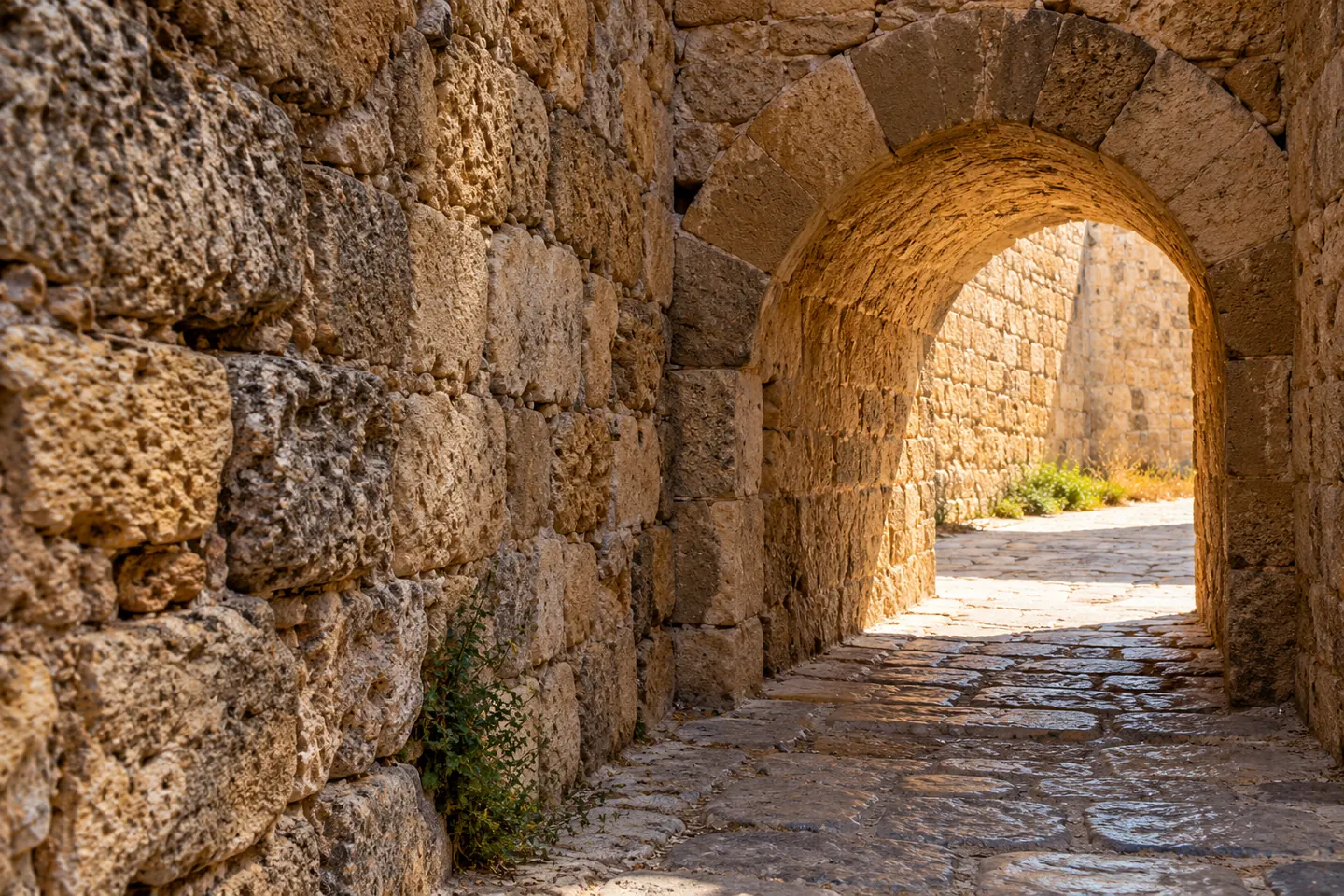
The fortifications reveal much about the city’s former role. Choose an area where you can understand the line of the walls, a gate and the direction of the harbour. Porta del Mare is one of the historic city gates. Such a stop can frame the rest of your visit without requiring you to walk along or climb every section of wall.
Check which paths are currently open. Historic masonry is not an unrestricted viewpoint trail. Stairs, uneven surfaces and lack of shade may make a shorter route sensible. If travelling with children, choose safe distances and manageable sections. A good view of the fortification’s structure is often more informative than a long circuit on which attention and energy fade.
Othello Citadel: history before legend
The site known as Othello Citadel originated as a historic harbour fortification. Its familiar name invites literary associations; these should be distinguished from established construction and usage history. During an explanation, ask about the surviving building elements and their functions. This makes the place more tangible than a story that mixes literature with actual events.
Decide in advance whether you want an extensive interior visit or to consider its exterior relationship with the old town. Admission requires its own time block. Accessibility and opening should be confirmed on the day of your visit. Combine the citadel with a suitable stretch of street and a break rather than a long succession of buildings whose differences become difficult to grasp along the way.
Understanding the former Saint Nicholas Cathedral during restoration
The striking building of today’s Lala Mustafa Pasha Mosque defines the old town’s appearance. Official project and foundation sources document extensive restoration work for 2026. Therefore, do not plan on a guaranteed interior visit. A sensible walking itinerary must also work when access or views are restricted by the works.
First explain the different phases of use and examine the accessible exterior relationships. The value of visiting a historic city does not depend on entering every important building. Construction work should also not be treated as a reliable basis for a fixed reopening date. Before a guided tour, clarify which areas will actually be accessible on the intended day and which alternative suits any restrictions.

Visit church ruins attentively, rather than merely as photo backdrops
Other church remains within the old town offer a glimpse of different forms of religious architecture. The ruins of Saint George of the Greeks are one example of a distinct architectural and historical subject. Choose only areas open to visitors and respect barriers. Wall remains and open spaces are not an invitation to climb.
Notice the layout, materials and relationship with the surrounding street network. Such observations bring a visit to life even without extensive dates. Leave enough time for shade and drinks. For a longer cultural day, alternate focused observation, walking and sitting. This sequence is usually more pleasant than a simple list of ruins, with one building following another.
Treat Varosha and Salamis deliberately as additions
Varosha is a different district with its own recent history and access conditions. Salamis is an ancient site outside the old town, requiring another journey and time to walk around the grounds. Neither destination automatically belongs to a walk within the walls. If you want to add one, other programme items must be reduced.
Ask what an offer actually includes. A tour name may refer to several themes without including every conceivable stop. For a first visit, the old town alone is a sensible focus. On a longer day, choose one addition according to your interests: recent history or ancient archaeology. This creates a clearer experience than rushing through three very different historical contexts.
Getting there, documents and a realistic daily schedule
For travel from the south, check the current conditions for travel within Cyprus. Preparing for the controlled crossing explains important distinctions. Relevant factors include nationality, required original documents and, for a hire car, specific permission and insurance. Other travellers’ experiences do not replace these checks.
Allow extra time for checks, walking and the return journey. A crossing is not an intermediate stop that can reliably be timed to the minute. Tell your guide your actual location and preferred return time. If you are coming from the southeastern holiday resorts, the selection of excursions from Ayia Napa may also help. A clearly agreed route with a few priorities makes it easier to absorb historical information and enjoy the visit without constant time pressure.
Frequently asked questions: Famagusta old town
Is Famagusta’s old town the same as Varosha?
No. The walled historic old town and Varosha are different areas with their own history and visiting arrangements. Salamis is also a separate destination outside the old town. Ask explicitly which stops a tour includes, and allow separate travel and visiting time for additional areas.
Can the interior of Lala Mustafa Pasha Mosque currently be visited with certainty?
An interior visit should not be treated as guaranteed. Official sources document extensive restoration work in 2026. Check current access before visiting. A good old-town walk explains history and exterior relationships and provides a suitable alternative when restrictions apply, without claiming a fixed reopening date.
What is needed when travelling from the south?
Check the current conditions for your nationality and the required original documents with the responsible authorities. A controlled crossing and, where applicable, hire-car permission and insurance must be considered separately. Also allow extra time. A general travel guide cannot replace an individual assurance of entry or that an excursion can go ahead.
Sources and further information
Editorial update: . Check opening hours, access and transport connections with the responsible organisations before visiting.